
Flow Drills
•01.25.2012 • Leave a Comment“Flow Drills” are training exercises commonly associated with the Filipino Martial Arts. Known by many names such as “Sumbrada Drills” (or simply “Sumbrada”), Transitional Drills or Evolutions, Flow Drills are two-person pre-arranged sequences constructed to convey lessons or develop attributes. Not unlike the two-man sets sometimes found in Chinese Martial Arts, Filipino Flow Drills utilize the energy based nature of the Filipino Martial Arts and require a living, breathing and responsive opponent.
In the Lacoste-Inosanto (Inosanto Blend) method of Kali, Sumbrada Drills (also known as Kuntra y Kuntra or Kuntra Kontrada) are taught to introduce students to the concept of counter-for-counter. As one student initiates an attack, the other second student counters the attack and returns a counter attack. The first student then counters the attack (thus, counters the counter) and the reciprocal dynamic creates a back and forth, fluid exchange. Typically, many of the drills taught by Guro Dan cycle continuously so that both sides have the opportunity to flow in an even and symmetric manner. Guro Dan also emphasizes the highly valued benefit of “flow”, encouraging students to play in a manner that is fluid and continuous rather than rigid, static or broken. This not only develops a sensitivity to adapt, modify and recover from unexpected changes but also enables participants to engage in an infinite number of repetitions. Paul Vunak, one of Guro Dan’s more well known students has stated that since we fight in an environment of continuous motion, we should train in motion as well.
Sometimes these drills are merely a construct developed to insert and then practice various skill sets such as locking, disarming or striking. “Hubad” (sometimes called Higot Hubad Lubud) is a simple three count flow drill that is used to teach basic stops, parries, coordination of both hands and movement to various reference points. In Sayoc Kali the 3 of 9 Tapping Drill is taught to incorporate the Feeder’s intention of accessing identified targets from the 3 of 9 Vital Template, and the Receiver’s basic crosstapping (crosshand tapping, or crossbody parrying) response. While one side installs target acquisition to lethal entry, the other side builds fundamental motions to counter attacks from any one of nine attacks. For the Feeder, targets are identified and accessed by inserting the left hand in clearing motions that can be translated easily to empty hand methods of trapping. While perceived initially as long or complicated, the great benefits derived from diligent practice yield essential tools that can be applied in different contexts, utilizing a variety of weapons platforms and amidst many ranges of combat.
Atienza Kali Evolutions, once understood and grasped on a basic level are then dissected to various combinations and manuevers. Sometimes called Attack Defense Patterns (ADP’s), the deconstruction of the drill into functional motions are applied in context, often at real speed and deliberate intent against one individual or multiple opponents. In this system, students are indoctrinated to various Fighter Types, methods and characteristics commonly observed and catalogued. AK students can then learn to adopt various styles and techniques, counter and defeat them.
Of course the end goal in all of these drills, regardless of the origin system, art or instructor is not to stay confined to the pattern but to break free from the arrangement but keep the lessons, skills and attributes. Guro Travis Downing and Guro Joey Pena, my own instructors from Sayoc LA (formerly Integrated Martial Arts) always stressed the preference to master fundamentals instead of collecting techniques. IEFMA holds the same value at it’s core. In a recent interview, Guro Dan explained his own feelings about the similarities between his studies in Kali and his training with Sigung Bruce Lee. He felt that the Filipino Martial Arts and Jeet Kune Do (JKD)complimented each other well due to their emphasis on fluid motions, the ability to adapt and modify and utilize weapons from a variety of sources. While JKD strived to constantly transcend preset patterns and forms, Filipino Kali keeps our drills alive by constantly infusing them with new methods, and applying them in new contexts.
Tuhon Tom Kier has said that every story has a moral, every drill has a lesson. What lessons do you take away from your training? Don’t let your drills control you. Your own training, your intent and even your own persona should drive and propel the drills that you use.
Sumbrada Concepts from Guro Harley Elmore.
Trapping and Striking from a Hubud structure, from Guro T. Kent Nelson.
Simo Eloy Quintin training Sayoc Kali 3 of 9 Tapping.
Tuhon Carl Atienza teaching elements of Knife Evolution 1.
Anatomy Review: Brachial Plexus
•01.22.2012 • Leave a CommentIn all martial arts, but particularly with edged weapons training like in Sayoc Kali, familiarity with anatomy and physiology is extremely important. All of our vital targets are internal targets. As Pamana Tuhon Sayoc has said, “All of our targets are under the skin. We do not have any skin targets.” Whether we are targeting to cause blunt trauma via impact (impact weapons or empty hand methods) or edged weapon penetration to affect circulation/oxygenation or neurological impairment, a fundamental grasp of anatomical targets and their corresponding physiological responses can greatly shape our choice of weapons and tactics.
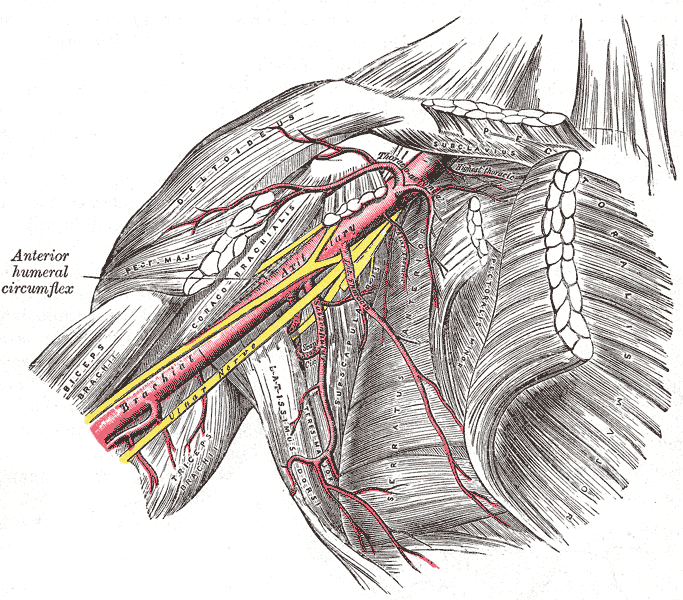
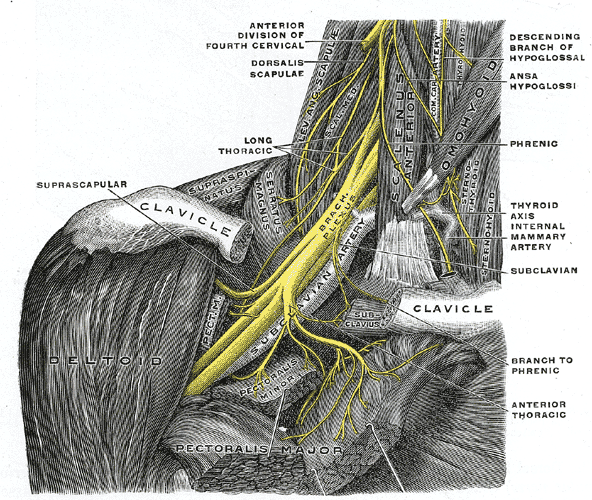
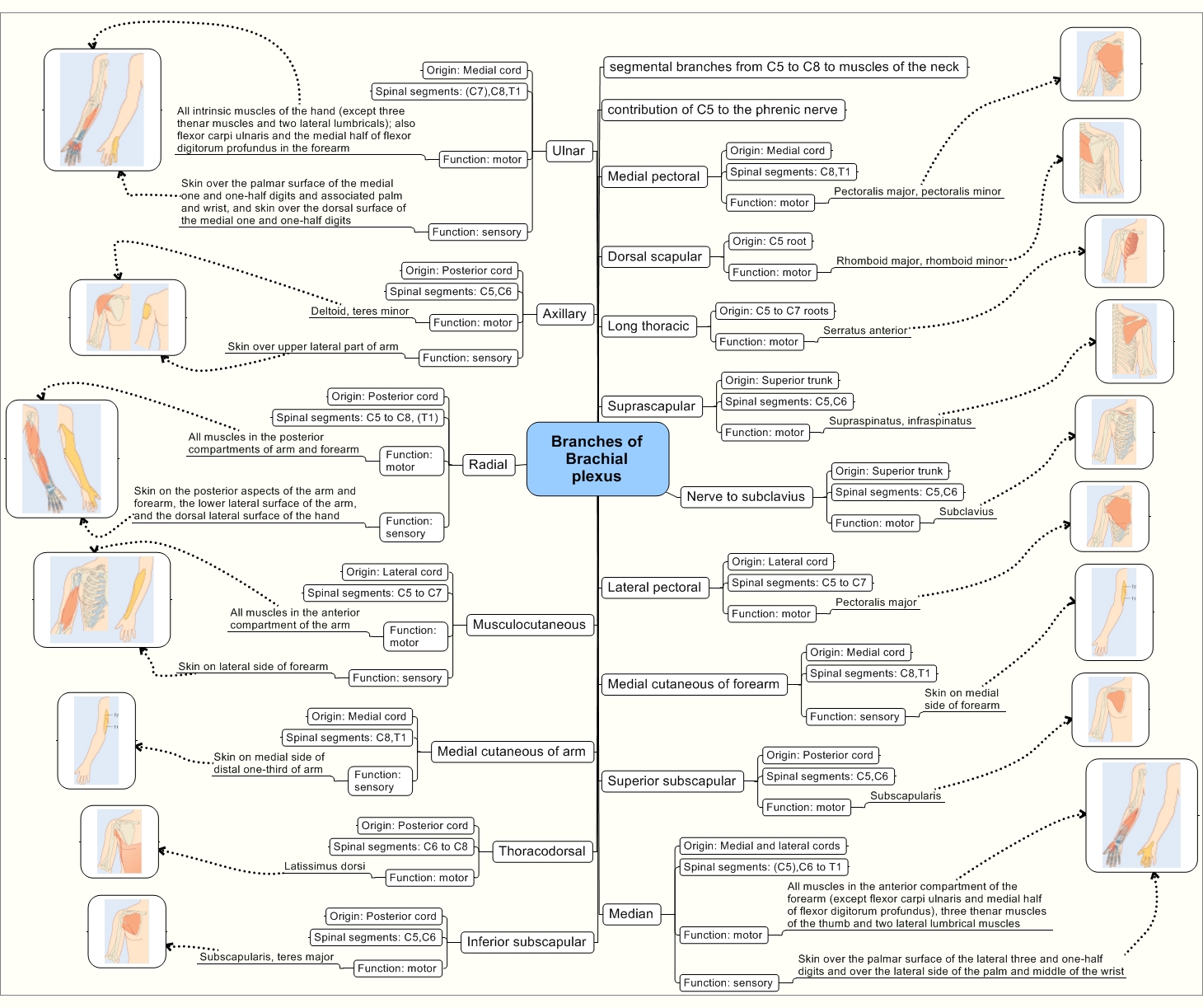
One of the first targets introduced in the Sayoc Kali Vital Template 3 of 9 is the brachial plexus. While familiar organs or vessels such as the heart or jugular vein are relatively familiar, the brachial plexus is often glossed over for the more enticing sub-mandible (mandible angle) target. Brachial plexus injuries are immediate in their effect, and contain great potential for impairment if injured. What many outside of newborn medicine are unfamiliar with is that many infants are born with brachial plexus injuries (shoulder dystocia) resulting from trauma incurred during birth. Sometimes it is cause intentionally when the physician presses on the clavicle and breaks it in an attempt to facilitate passage through the birth canal. While these injuries will heal, these babies are often left with limited mobility or total immobility following the event. Physical and occupational therapists also see these injuries in patients who have endured sudden traumas such as motor accidents, often working with them for months or years at a time to regain function in the affected arm.
While the brachial plexus is most easily injured by traumas such as these, the normal neurological status can also be affected by barotraumas along the pathway innervating from the spinal column. While some dismiss the “brachial stun” as nothing more than a cheap Vulcan Neck Pinch illusion, an understanding of neurophysiology would immediately open the technique as a legitimate possibility. The viral video posted below is comical and amazing, but Guro Harley Elmore of Warrior’s Way International gives a great explanation of how it works.
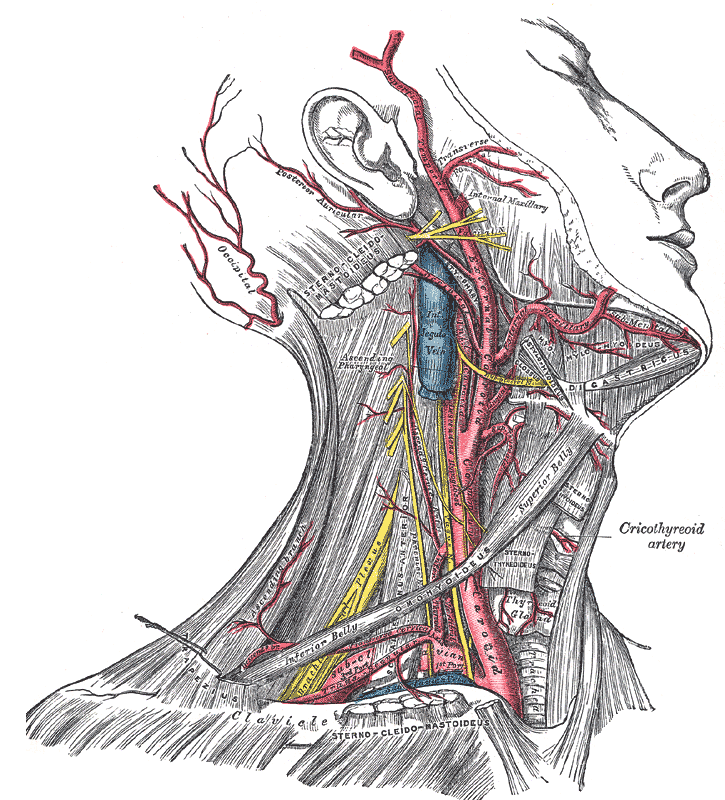
The following images were obtained from Wikipedia for your reference, but I encourage all of my students to do your own research and learn as much anatomy as you can. See you in class.
Reference:
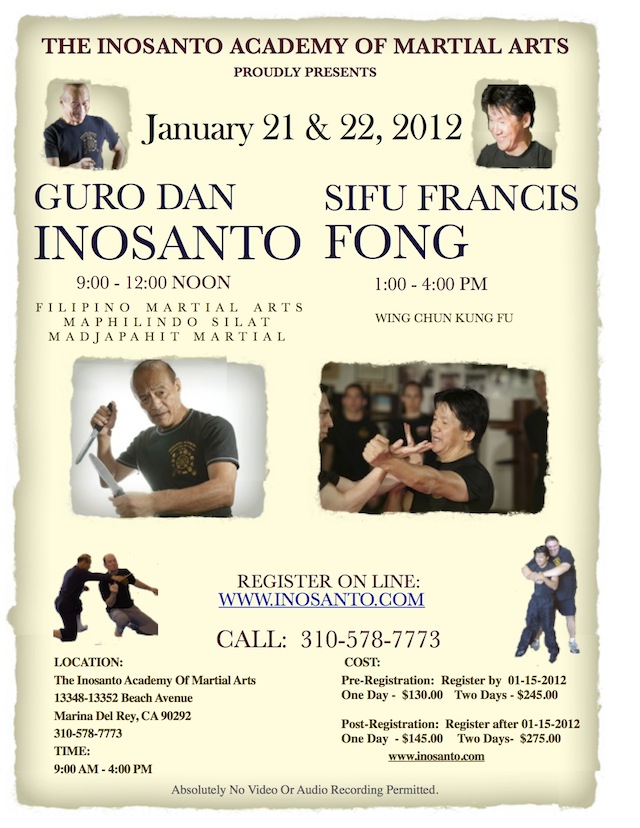
Guro Dan Inosanto & Sifu Francis Fong Seminar
•01.19.2012 • Leave a CommentThis weekend Guro Dan Inosanto and Sifu Francis Fong will be teaching a seminar at the Inosanto Academy in Marina del Rey. This is a chance to train with some of the best instructors in the world in Maphilindo Silat, Filipino Kali and Wing Chun Kung Fu. Please refer to the flier for details.
Book Review: How to Survive The End of the World As We Know It
•01.18.2012 • Leave a Comment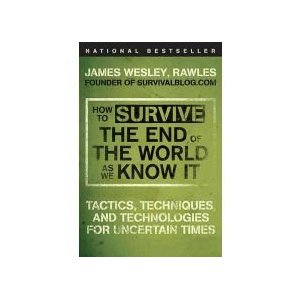
Part of our training includes planning for any kind of emergency, crisis or disaster. Whether we are learning to handle violent encounters, medical emergencies or even simply hard times brought on by family expenses like daycare or college, Sayoc and Atienza Kali students are taught to think of scenarios before they occur so we can plan accordingly. We are feeders, not receivers.
In the past two months I have been devouring books, probably around two a week. Some have been great, some have been good but not that relevant to our training here at IEFMA. One of my resolutions for this new year was to read more, and encourage readers on this site to do the same by sharing my thoughts. After going on my Amazon spree acquiring books like “On Killing”, “Facing Violence” and “The Gift of Fear” (review to come), I started looking into preparedness books.
“How to Survive The End of the World As We Know It: Tactics, Techniques and Technologies for Uncertain Times” was written by James Wesley Rawles, the blogger and founder of SurvivalBlog.com and a former US Army Intellence officer. It is a comprehensive and palatable read, covering literally everything I could possibly think of in “The End of the World As We Know It” situation. While some of the material is further in it’s progression than I am in my personal evolution I did find myself reading about raising livestock and installing solar panels for energy with as much interest as the components of food storage, weapons and communication. Rawles’ ideas were right on with our own training, including use of the term “force multiplier” to not only include weapons but also night vision and comm’s.
Here are the first few paragraphs of the book, which gives a perspective of our culture through his lens and sets the tone for the book. I made my wife read this last night and even she agree that it is fairly convincing. I hope it is for you too.
From the Introduction:
An Extremely Fragile Society
We live in a time of relative prosperity. Our health care is excellent, our grocery-store shelves bulge with a huge assortment of fresh foods, and our telecommunications systems are lightning fast. We have cheap transportation, with our cities linked by an elaborate and fairly well-maintained system of roads, freeways, rails, canals, seaports, and airports. For the first time in human history, the majority of the world’s population now lives in cities.
But the downside to all this abundance is overcomplexity, overspecialization, and overly long supply chains. In the First World, less than 2 percent of the population is engaged in agriculture or fishing. Ponder that for a moment: Just 2 percent of us are feeding the other 98 percent. The food on our tables often comes from hundreds if not thousands of miles away. Our heating and lighting are typically provided by power sources hundreds of miles away. For many people, even their tap water travels that far. Our factories produce sophisticated cars and electronics that have subcomponents that are sourced from three continents. The average American comes home from work each day to find that his refrigerator is well-stocked with food, his lights come on reliably, his telephone works, his tap gushes pure water, his toilet flushes, his paycheck has been automatically deposited to his bank, his garbage has been collected, his house is a comfortable seventy degrees, his televised entertainment is up and running 24/7, and his Internet connection is rock solid. We’ve built a very Big Machine that up until now has worked remarkably well, with just a few glitches. But that may not always be the case. As Napoleon found out the hard way, long chains of supply and communication are fragile and vulnerable. Someday the Big Machine may grind to a halt.
Let me describe just one set of circumstances that could cause that to happen:
Imagine the greatest of all influenza pandemics, spread by casual contact—a virus so virulent that it kills more than half of the people infected. And imagine the advance of a disease so rapid that it makes its way around the globe in less than a week. (Isn’t modern jet air travel grand?) Consider that we have global news media that is so rabid for “hot” news that they can’t resist showing pictures of men in respirators, rubber gloves, goggles, and Tyvek coveralls wheeling gurneys out of houses, laden with body bags. These scenes will be repeated so many times that the majority of citizens decides “I’m not going to go to work tomorrow, or the day after, or in fact until after things get better.” But by not going to work, some important cogs will be missing from the Big Machine.
What will happen when the Big Machine is missing pieces? Orders won’t get processed at the Walmart distribution center. The 18-wheelers won’t make deliveries to groceries stores. Gas stations will run out of fuel. Some policemen and firemen won’t show up for work, having decided that protecting their own families is their top priority. Power lines will get knocked down in windstorms, and there will be nobody to repair them. Crops will rot in the fields and orchards because there will be nobody to pick them, or transport them, or magically bake them into Pop-Tarts, or stock them on your supermarket shelf. The Big Machine will be broken.
Does this sound scary? Sure it does, and it should. The implications are huge. But it gets worse: The average suburban family has only about a week’s worth of food in their pantry. Let’s say the pandemic continues for weeks or months on end—what will they do when that food is gone and there is no reasonably immediate prospect of resupply? Supermarket shelves will be stripped bare. Faced with the prospect of staying home and starving or going out to meet Mr. Influenza, millions of Joe Americans will be forced to go out and “forage” for food. The first likely targets will be restaurants, stores, and food-distribution warehouses. As the crisis deepens, not a few “foragers” will soon transition to full-scale looting, taking the little that their neighbors have left. Next, they’ll move on to farms that are in close proximity to cities. A few looters will form gangs that will be highly mobile and well armed, ranging deeper and deeper into farmlands, running their vehicles on surreptitiously siphoned gasoline. Eventually their luck will run out and they will all die of the flu, or of lead poisoning. But before the looters are all dead they will do a tremendous amount of damage. You must be ready for a coming crisis. Your life and the lives of your loved ones will depend on it.
Quote of the Day
•01.15.2012 • Leave a CommentWatch your thoughts, they become words.
Watch your words, they become actions.
Watch your actions, they become habits.
Watch your habits, they become your character.
Character is everything.
– Author Unknown
(Although commonly attributed to Ralph Waldo Emerson, “Frank Outlaw”, Lao-Tse/Lao Tzu and others.)
Book Review: On Killing
•01.12.2012 • Leave a Comment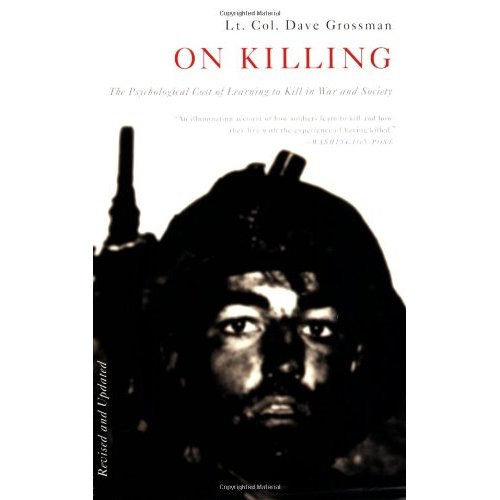
Several years ago while still training at Integrated Martial Arts, Guro Travis Downing highly recommended the book “On Combat”, the second book by Lt. Col. Dave Grossman. Since then it has been one of the core books in our unofficial training syllabus, and for those of you who have not yet read it, please do. The last few weeks I have been devouring books, and my first review for this site is Grossman’s first publication “On Killing: The Psychological Cost of Learning to Kill in War and Society”.
Since it’s original publication in 1995, “On Killing” has become required reading for the FBI and DEA academies, West Point, the Air Force NCO and is on the USMC’s Commandant’s Required Reading List. Part of what made this a seminal contribution was Grossman’s ability to connect rigorous scientific studies, anecdotal information and authoritative insight in a way that underscores the relevance of this topic across multiple demographics. “On Killing” examines the origins of our responses to killing, death and what Grossman states is the universally feared element, interpersonal human aggression. I found his discussions on desensitization, alienation and our ever growing desire to distance ourselves from violence particularly significant. As a psychologist he introduces the concepts of classical and operant conditioning related to killing, yet as an authority on in this field he also extrapolates his insight into our modern culture of violence, particularly as it relates to children.
I cannot recommend this book strongly enough, especially when combined with his follow up “On Combat”. While not wholly definitive in the realms of killing, combat and violence they introduce a very objective and scientific approach to some of the most subjective and emotional subjects in our human experience.
“There are two things worth spending your money on, books and food.” – Lola Hillman Byron, former Director of Advising for the College of Behavioral and Social Sciences at the University of Maryland, College Park… and my first boss.
Spotlight on San Miguel Eskrima
•01.11.2012 • Leave a CommentMy first Filipino Martial Arts system was Doce Pares Eskrima, or more specifically the Grandmaster Cacoy Canete System of Doce Pares Eskrima. I was a student of the Patalinghug family in Maryland, however when my wife and I decided to move cross country I had to find other instructors to learn from. My first mission was simply to visit and hopefully meet Guro Dan Inosanto, which I soon did. My second was to continue my training in Doce Pares, and within a few months I began training under Guro Ramon Rubia.
For those of you that do not know, Doce Pares was founded as an organization and was not in it’s inception a particular system or style. Each of the greatest Eskrima fighters and masters at the time (1932) sought to bring forth their own strengths and provide a comprehensive showcase that would demonstrate the best Cebu had to offer. While Guro Ramon and his wife Guro Eva Canete had been trained in the more modern “kurbada” style of today’s Doce Pares curriculum, Guro Ramon had maintained his studies directly under Grandmaster (GM) Momoy Canete and his original disciples in the Philippines. This was the “old style” of Doce Pares, largely blade influenced and incorporating wide yet very mobile footwork, throwing knives and a long and heavy whip made from Manila rope. GM Momoy became known for using a keep cross step motion that mirrored depictions of the Archangel St. Michael defeating the fallen angel Lucifer and so his particular expression of fighting came to be known as San Miguel Eskrima.
Footage of GM Momoy is quite rare, and instructors who have trained under him and his core students are few and far between. Guro Ramon continues his training and his one of the few individuals who have had this privilege, and can demonstrate the finer details of San Miguel Eskrima. Below is a clip of GM Momoy, demonstrating use of footwork, the flywheel and florete (floating sword) styles, whip, throwing knives and baston y daga (stick and dagger) lock up techniques.
My Instructors
•01.08.2012 • Leave a CommentThis is the first post of many that will showcase clips of my instructors. IEFMA holds at it’s core Sayoc Kali, Atienza Kali and Inosanto Filipino Martial Arts.
Here is a segment of Pamana Tuhon Sayoc discussing blade fundamentals at Sayoc Sama Sama a few years ago:
A clip of Tuhon Carl Atienza:
And my favorite vintage clip of Guro Dan Inosanto:
My direct instructors in Sayoc Kali and Atienza Kali are Guro Travis Downing, Guro Joey Pena and Guro Brian Calaustro. I do train with Guro Dan Inosanto every week.
Quote of the Day
•01.08.2012 • Leave a Comment“Be strong to be useful.”
– Georges Hebert, founder of the Natural Method
Thank you to Guro Willie Laureano for putting me on to his work.
 Inland Empire Filipino Martial Arts